
Investigating a rare buried prehistoric landscape – and sharing the story with the local community
The challenge
Orion Heritage is supporting the archaeological investigation of Slate Meadow, Bourne End, ahead of a new residential development in the Wye valley. Working alongside field archaeologists from Oxford Archaeology, the project has followed a careful, staged programme of excavation – and, just as importantly, has shared the story of what is being found with the local community.
Our approach
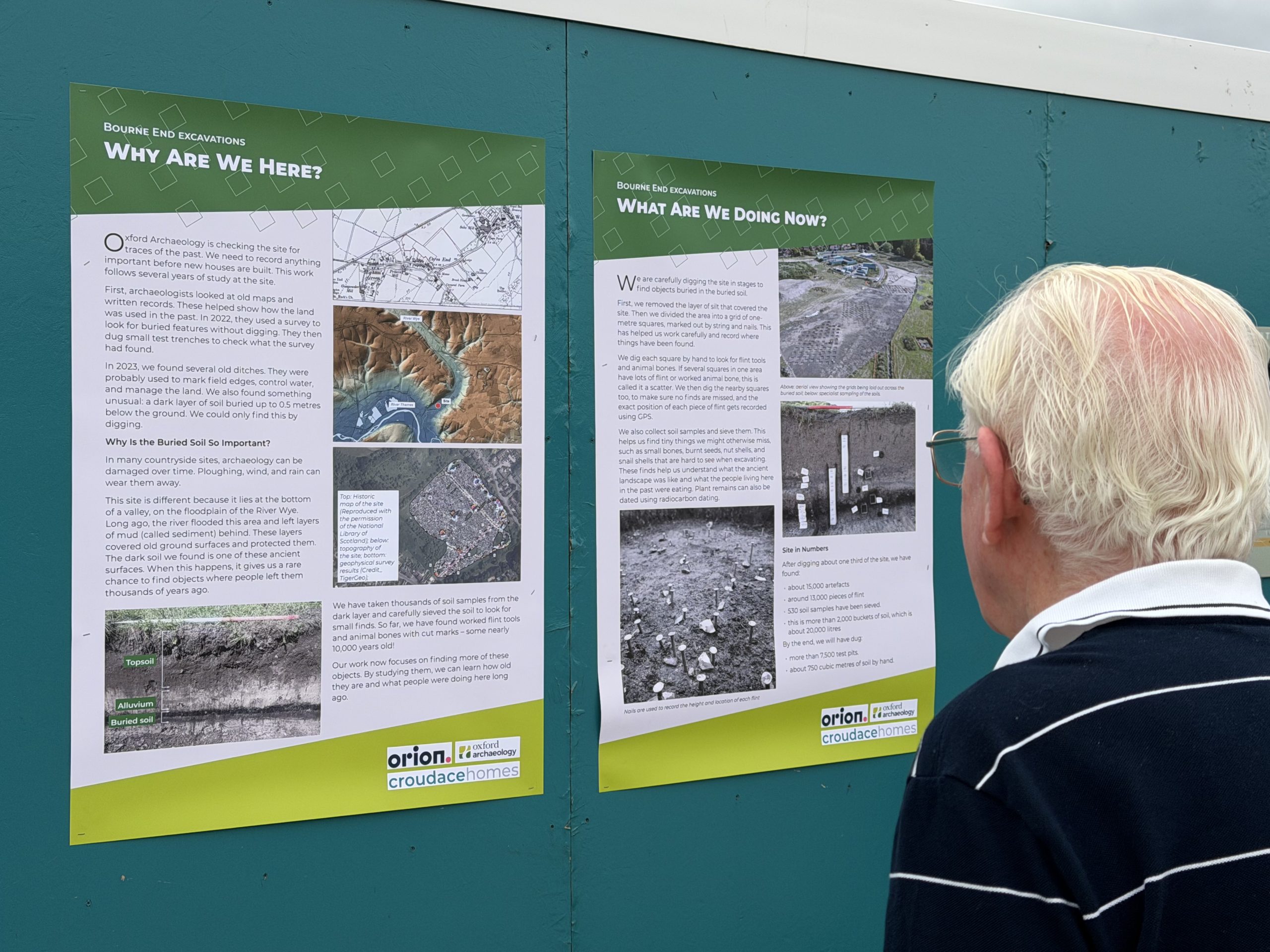
The site is unusual. It lies at the bottom of a valley where, over thousands of years, the river Wye has repeatedly laid down layers of silt and sediment that sealed and protected earlier ground surfaces. One of these buried surfaces – a dark layer of soil up to half a metre below the modern ground – survives here, whereas elsewhere such deposits have often been ploughed away or worn down by wind and rain. The buried soil offers a rare chance to find objects close to where people left them thousands of years ago.
Investigation has built on several years of earlier study. Archaeologists first examined historic maps and written records, then, in 2022, used geophysical survey to identify buried features without digging, followed by targeted trial trenching. In 2023, this work revealed a series of old ditches – probably used to mark field boundaries, manage water and work the land – alongside the far more unusual discovery of the buried soil, which could only be found by excavation.
To recover finds from the buried soil, the site has been excavated in stages.
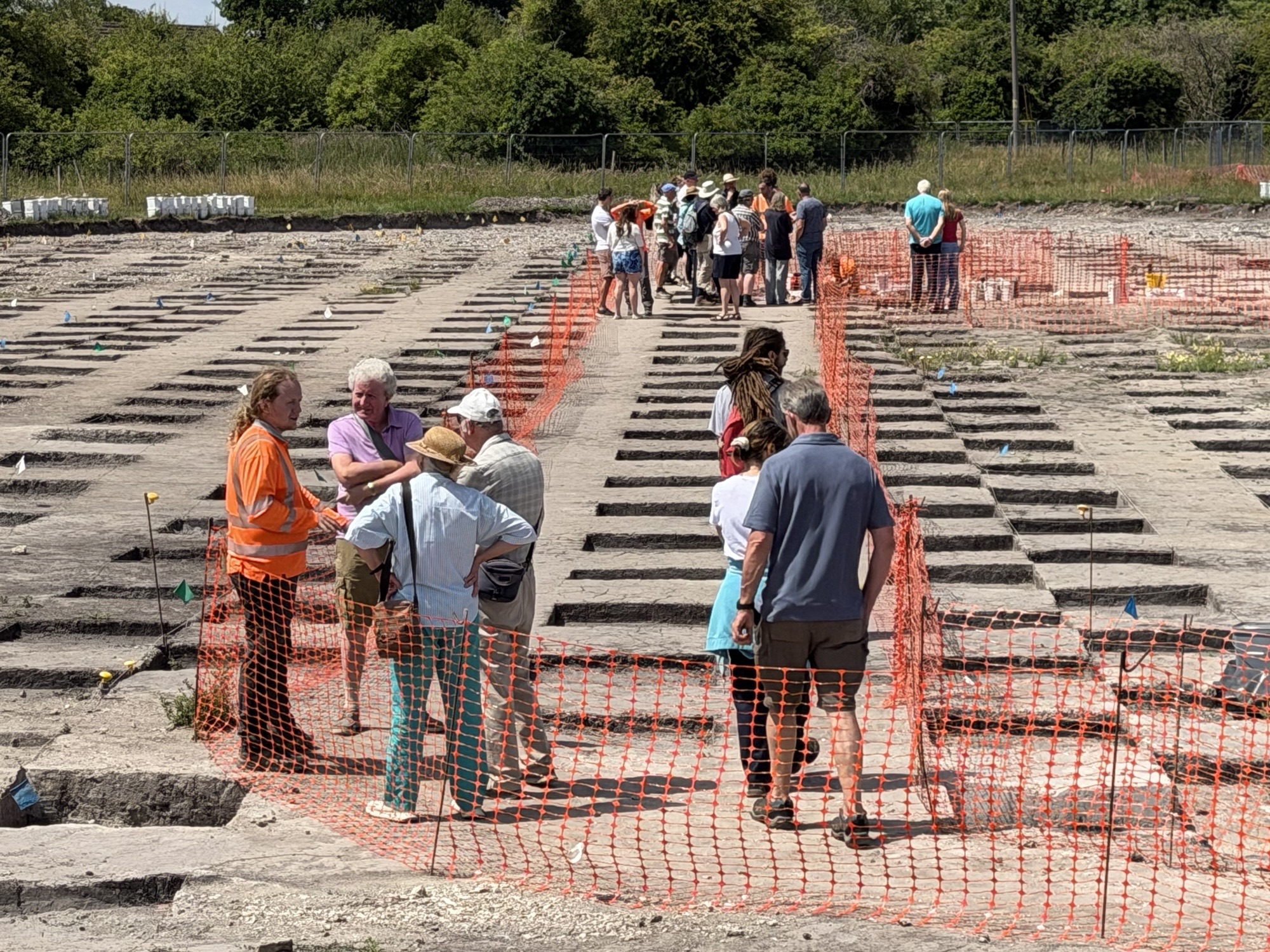
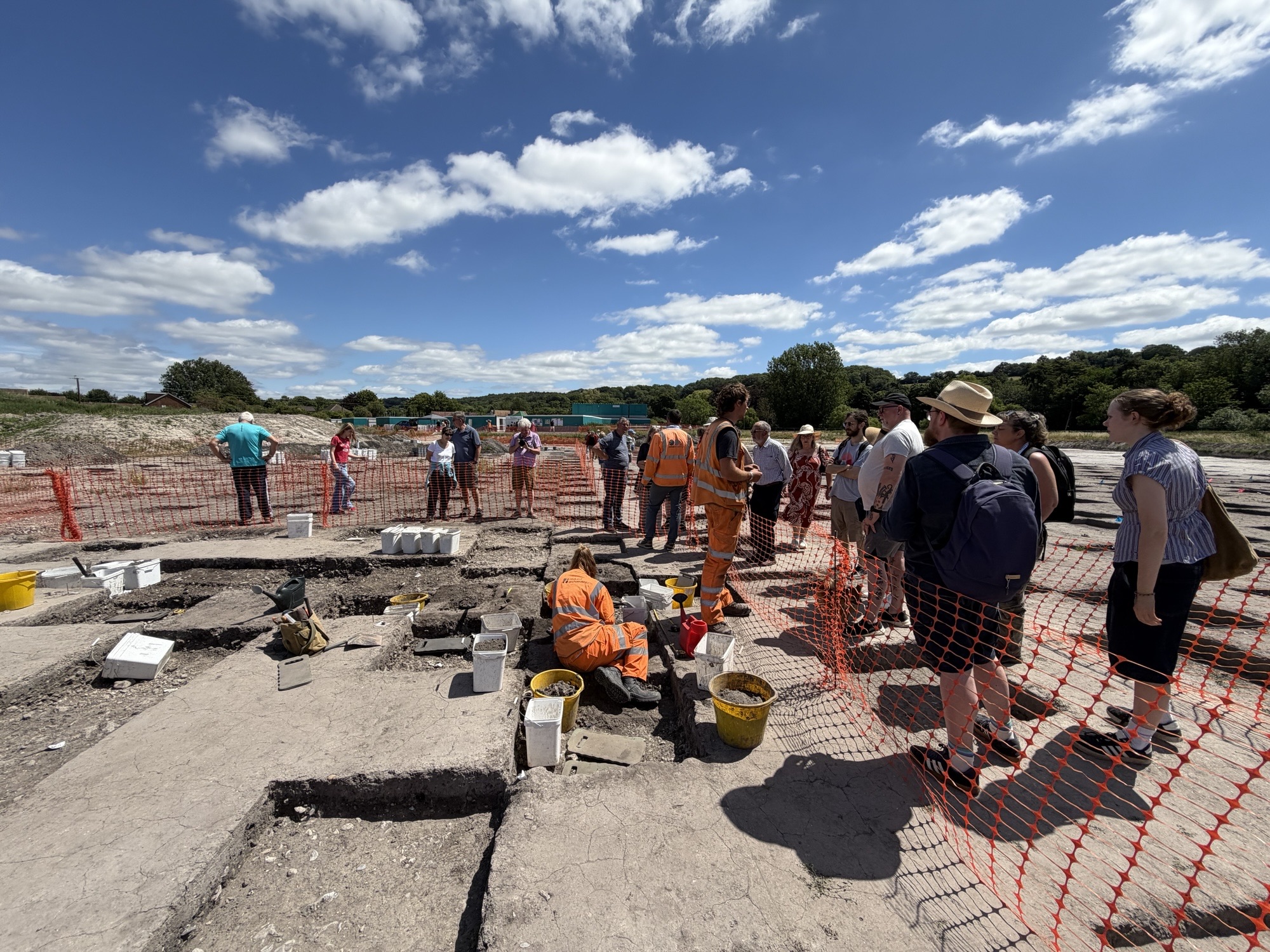
After the overlying silt was removed, the area was divided into a grid of one-metre squares, marked out with string and nails and dug carefully by hand.
Where flint or worked animal bone is found in numbers – a concentration archaeologists call a scatter – the surrounding squares are excavated too, so that nothing is missed, and the exact position of each piece of struck flint is recorded using GPS.
Soil samples are collected and sieved to recover the smallest evidence: tiny bones, burnt seeds, nutshells and snail shells that help build a picture of the ancient landscape and what the people living here once ate.
The results
The results have been remarkable.
After excavating around a third of the site, more than 15,000 artefacts have been recorded, including around 13,000 pieces of struck flint, alongside worked flint tools and animal bones bearing butchery marks – some nearly 10,000 years old.
By the end of the programme, the team expects to have hand-dug more than 7,500 test pits and around 750 cubic metres of soil, with over 530 soil samples – more than 2,000 buckets, or some 20,000 litres – already processed.
Together these finds are beginning to reveal how people were living and working in the Wye valley at the very start of the post-Ice-Age period.
Alongside the excavation, a central part of the project has been sharing the discoveries with the local community.
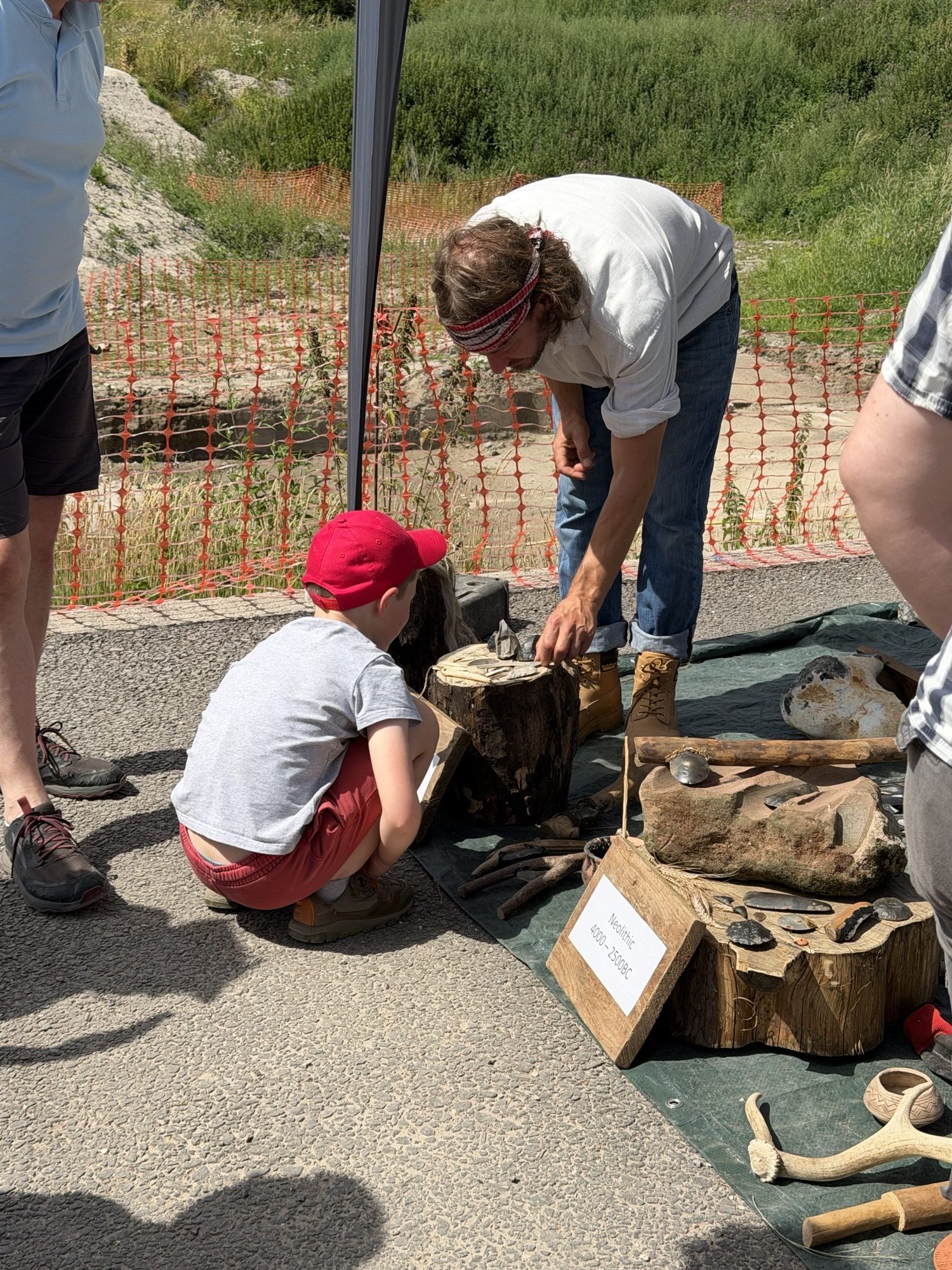
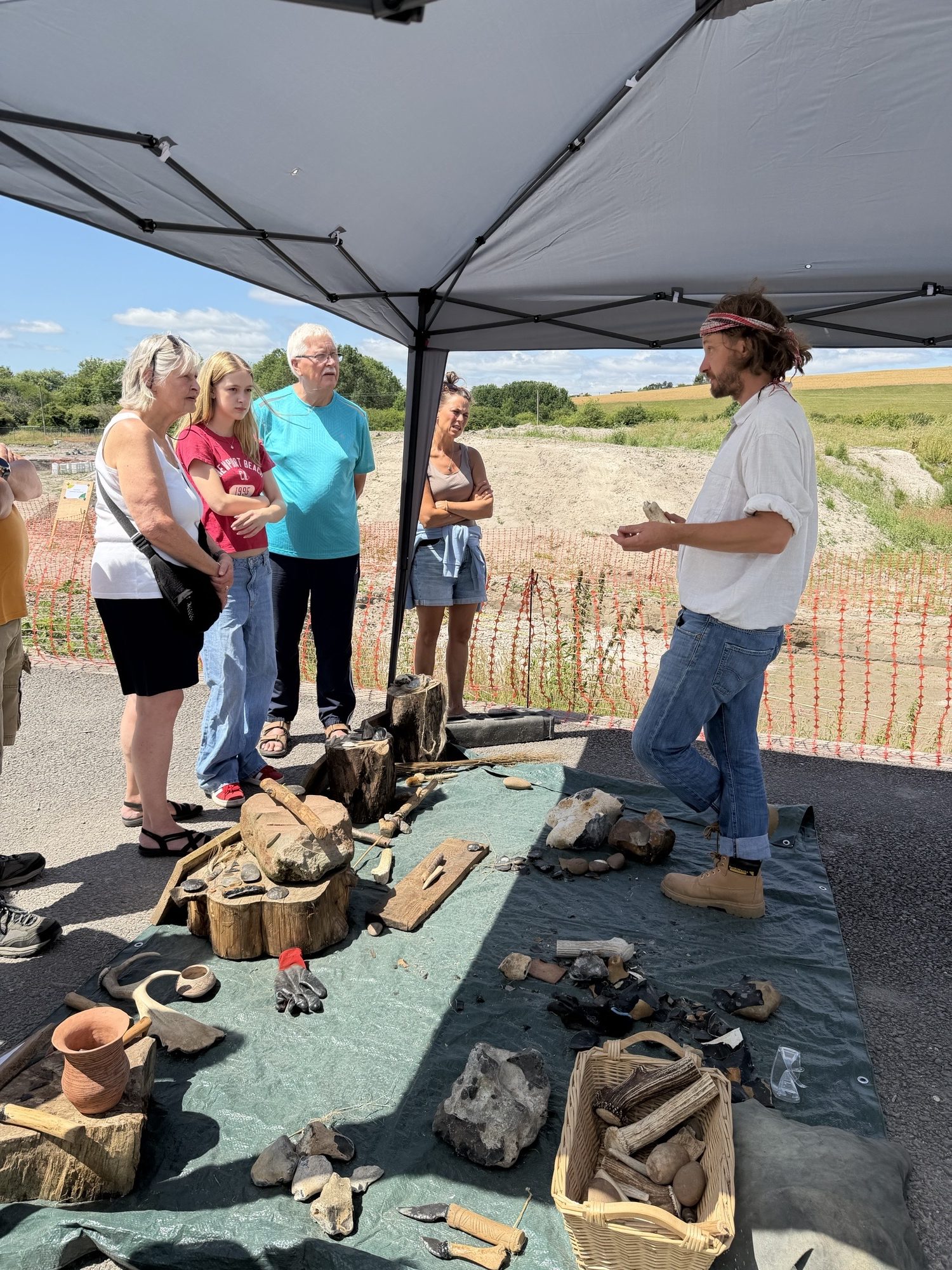
On Saturday 4th July 2026, the site hosted an open day that welcomed 480 people from the surrounding area, giving local residents the rare opportunity to see the excavation first-hand and hear about the finds directly from the archaeologists.
The open day helped local people understand the deep history beneath their feet, and set out to connect the future community at Slate Meadow with the long story of the place before the new homes are built.
Key outcomes
- Archaeological investigation of a rare, well-preserved buried prehistoric land surface within a river floodplain
- Staged, hand-excavated programme using a one-metre grid, GPS-recorded finds and extensive soil sampling
- More than 15,000 artefacts recorded so far, including around 13,000 pieces of struck flint and butchered animal bone up to nearly 10,000 years old
- Over 530 soil samples processed, with more than 7,500 test pits and around 750 cubic metres of soil to be hand-dug by the end of the programme
- Accessible on-site interpretation sharing the discoveries with the local community ahead of development