
Managing complex archaeology at scale across a major strategic housing site
The project
Orion Heritage has provided long-term archaeological and heritage consultancy for South Marston, a major consented residential scheme delivering 2,380 homes alongside community facilities, a new primary school and extensive green space. Forming the northern part of the Swindon North Eastern Villages expansion area, the site lies within a landscape of high archaeological potential.
Orion Heritage was originally appointed to prepare the heritage assessment and heritage Environmental Statement chapter supporting the outline planning application, and subsequently to discharge the archaeological conditions attached to the outline consent. Our early work included a desk-based assessment, geophysical survey and several phases of archaeological evaluation, which identified multiple historic settlements and features spanning the Bronze Age, Iron Age and Roman periods.
Our approach
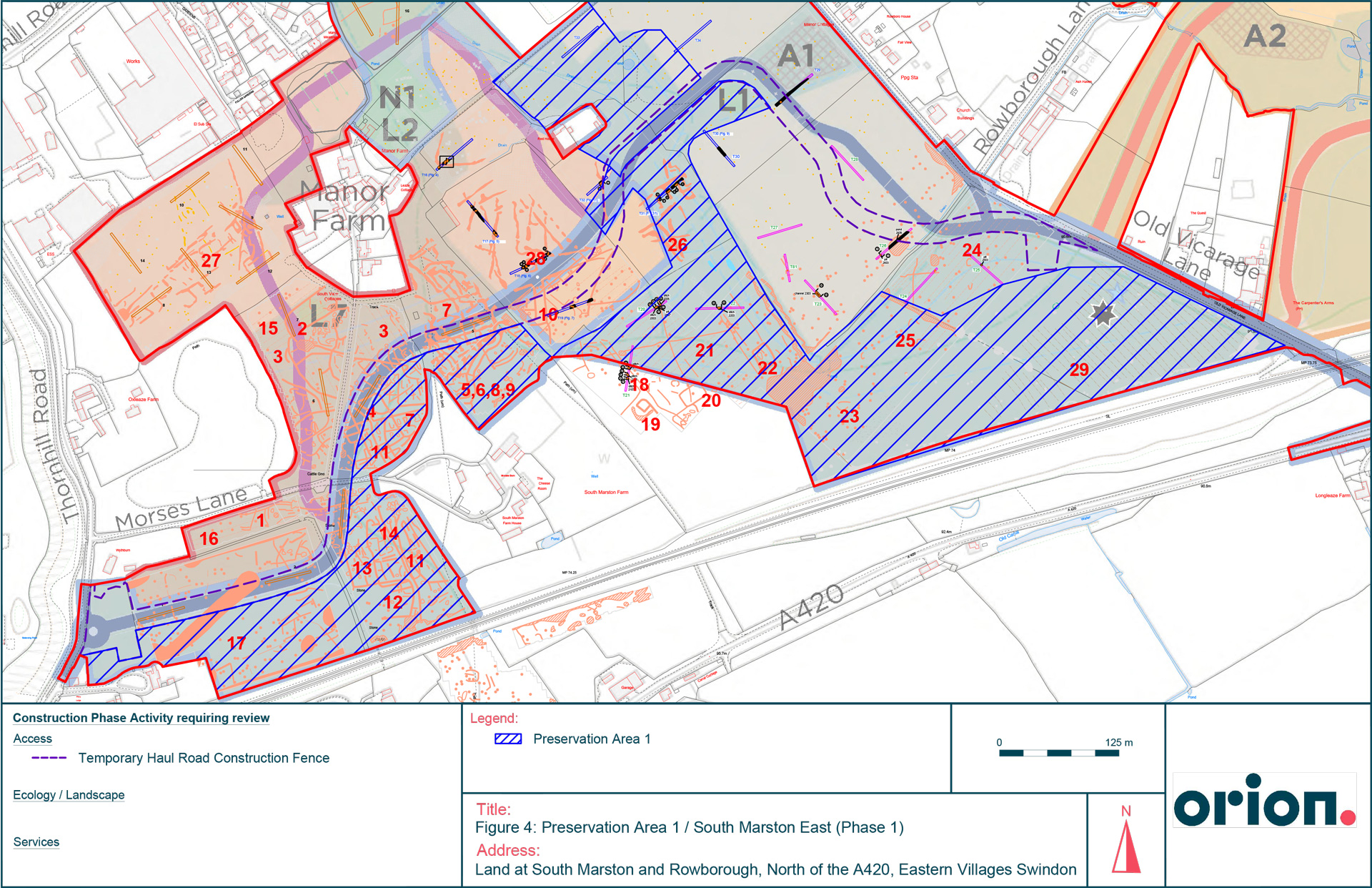
On our advice, the scheme layout was devised to exclude most of the large historic settlement, reducing both the potential impact on the remains and the cost of excavation. Our assessment also demonstrated that there would be no negative effect on nearby listed buildings.
We formulated and agreed a site-wide outline archaeological mitigation strategy, written into the archaeological planning conditions, and following the grant of permission prepared a comprehensive development-wide Written Scheme of Investigation and an outline archaeological management plan for remains preserved within the scheme’s open space.
The results
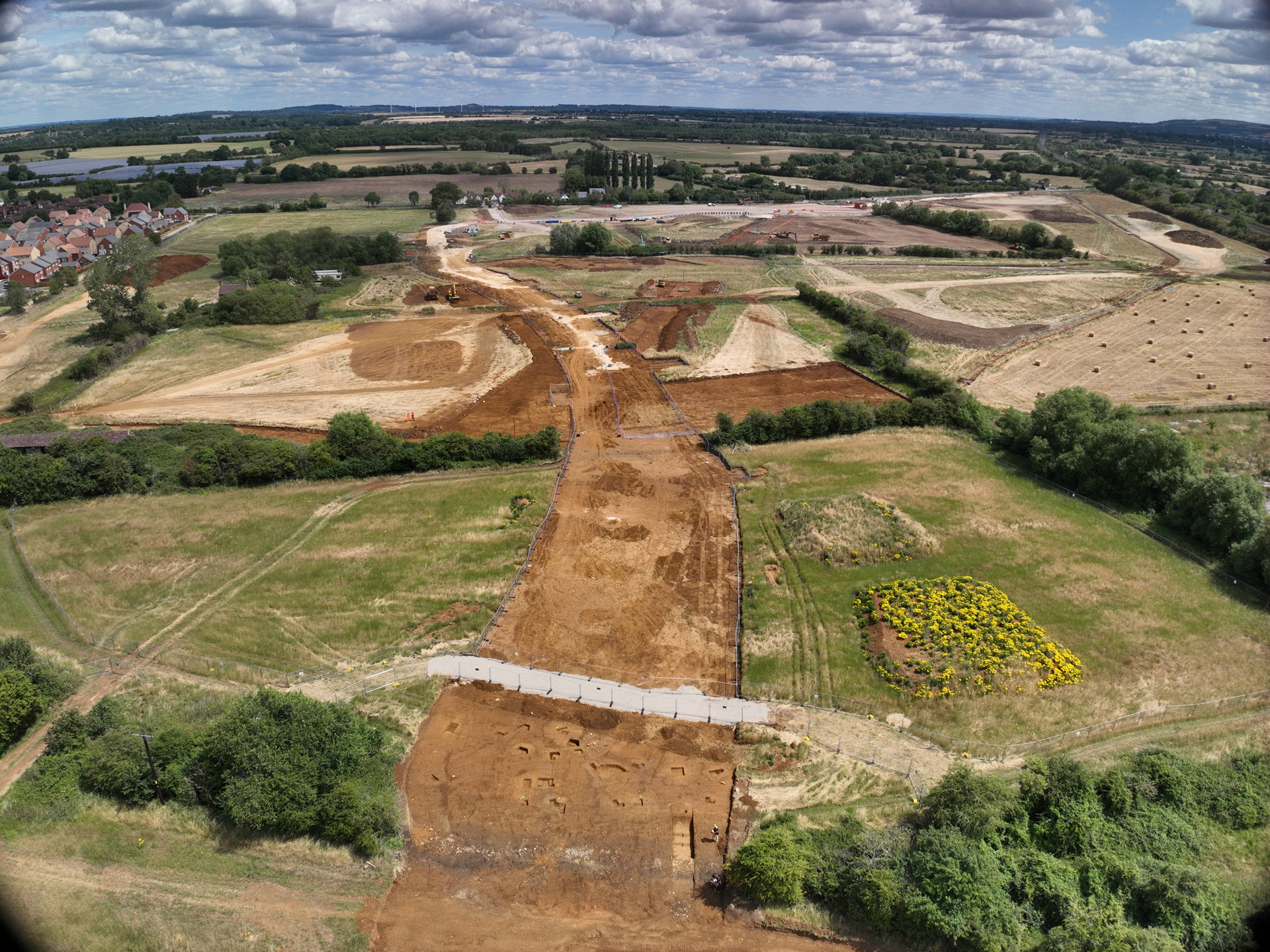
Since then, working on behalf of Taylor Wimpey and Vistry, Orion Heritage has moved from strategy into delivery. We managed the tendering and procurement of the mitigation works and have overseen the archaeological excavations across the infrastructure and housing areas of Woodlands, the western half of the development. This has involved an 18-month programme of fieldwork requiring close, sustained coordination between the Wiltshire Council archaeology team, the appointed archaeological contractor MOLA, the clients, development project managers Ward Williams, groundworkers, ecologists and a wide range of other stakeholders.
The excavations revealed Iron Age settlement remains alongside extensive and complex Roman settlement evidence, significantly expanding understanding of the site’s development through time. The archaeology proved more complex than anticipated, and the work was carried out through some of the wettest winter and spring conditions in recent years, with ground conditions at times extremely challenging.
Orion Heritage’s role focused on keeping investigation rigorous and properly resourced while maintaining momentum on a live development programme, adapting the approach as the scale and significance of the remains became clear.
A programme of public outreach was delivered alongside the fieldwork, sharing the discoveries with the local community. Attention now turns to the eastern half of the site, where the next phase of archaeological works is about to begin.
Key outcomes
- Integrated archaeology and built heritage advice for a 2,380-home strategic residential scheme
- Archaeological and heritage assessments prepared in support of the outline planning application
- Strategic advice shaping the scheme layout to reduce archaeological impact and excavation cost
- Outline planning permission successfully secured, with archaeological conditions agreed
- Development-wide Written Scheme of Investigation agreed for the whole scheme
- Tendering and procurement of the archaeological mitigation works managed on behalf of the clients
- Management of an 18-month programme of excavation across the western half of the development
- Iron Age settlement and extensive, complex Roman settlement remains revealed and investigated
- Complex archaeology successfully managed through exceptionally challenging ground conditions
- Public outreach programme delivered during the works
- Next phase of archaeological investigation now commencing on the eastern half of the site