

What the built heritage inquiry means for developers and land promoters
Presenting the Culture, Media and Sport Committee’s report to Westminster Hall on 16 July, Jo Platt MP closed with a line that may be quoted back to government for some time: heritage “should not be viewed as a constraint on growth; it should be recognised as an enabler of growth”.
That argument has been made by the heritage sector for years.
What has changed is where it is now being made from. Protecting built heritage, published on 13 July, is the product of an inquiry launched in December 2024 that took evidence from 26 witnesses across five sessions and received 113 written submissions. Its central claim is commercial: Historic England estimates that up to 670,000 homes could be created through the reuse of vacant or under-used historic buildings – almost half the government’s 1.5 million homes target.
For developers and land promoters, three findings carry more practical weight than the headline number.
Reuse-first, not housing-only
Asked in the debate whether underused heritage assets might also serve hotel and holiday accommodation, Platt was explicit that the committee’s recommendation is a reuse-first approach and not a housing-only one. The test it applies is whether a building remains “occupied, economically viable and actively used”.
That widens the aperture considerably. A vacant listed mill, bank or civic building does not have to be a residential conversion to satisfy the policy direction the committee is pressing for. Mixed-use, employment, hospitality and community uses all sit within this sphere, and for sites where residential viability is marginal, that flexibility is worth understanding.
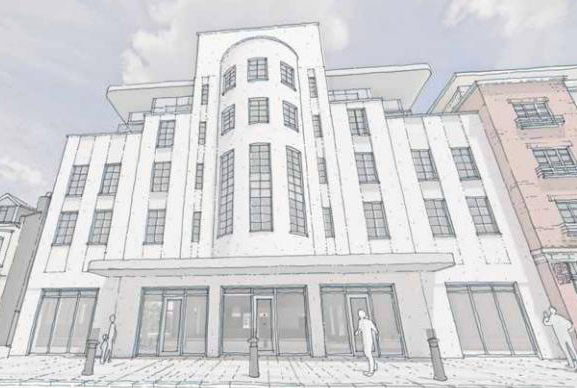
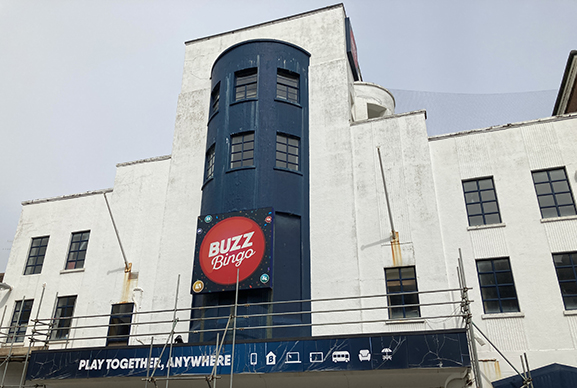
It is also a reminder that viability and heritage protection are aligned more often than they are opposed. At Buzz Bingo in Worthing, a landmark 1930s Art Deco cinema had deteriorated substantially, presenting heritage and development challenges together. Orion Heritage was appointed to carry out detailed historical research and heritage assessment supporting the wider regeneration proposals, establishing an evidence base around the building’s architectural significance, historical evolution and design character. That work allowed conservation priorities to be balanced against the long-term viability of the building, and the scheme drew a positive response from local heritage groups. The same evidence base underpinned both the conservation approach and the commercial case for the scheme.
Approved, but late
The most commercially significant point in the statement had nothing to do with housing numbers. Platt told the House that the committee heard evidence that many listed building consent applications are ultimately approved, but that decisions are often delayed, creating uncertainty and additional costs.
On most schemes affecting designated assets, the exposure is not that consent will be refused. It is that it will arrive late, after the programme has been built around an assumption about timing, and after costs have accrued against a fixed finance position.
The committee proposed some remedies for this problem: wider use of local listed building consent orders for routine works, strengthened conservation capacity in local planning authorities, and – the recommendation with the most immediate relevance to how schemes are run – promoting earlier engagement between applicants and planning authorities.
Early engagement is the part within a developer’s control today.
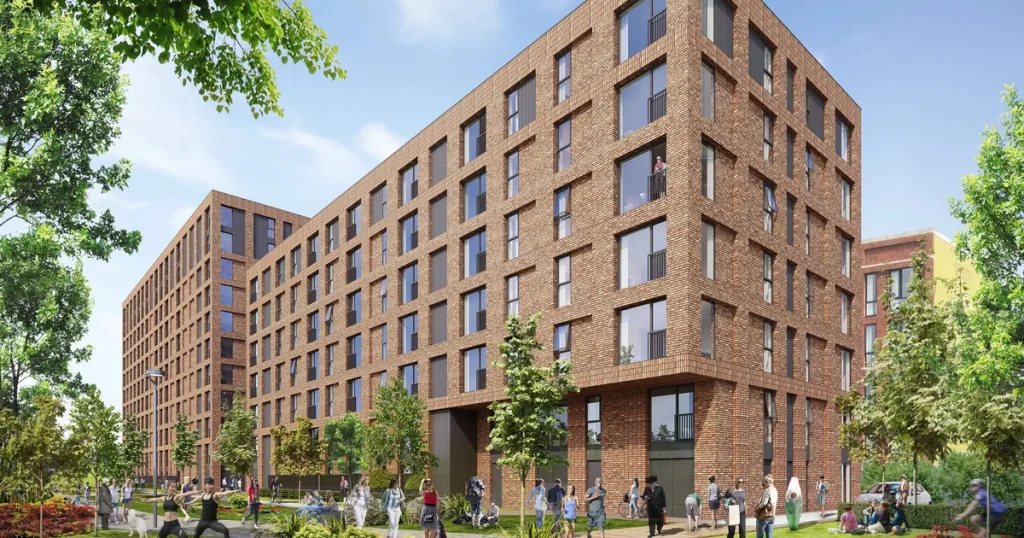
At Upper Wharf Street in Salford, the challenge was delivering new mid-rise housing within a complex historic townscape, affecting the setting of a Grade II listed terrace and a designated conservation area, as part of the wider Crescent regeneration corridor. Following the original Heritage Statement, Orion provided sustained technical support to the client team, including detailed rebuttals responding to conservation officer concerns raised during consultation on scale, setting and visual impact. Answering those objections with evidence, at the point they were raised, kept a challenging scheme moving in a highly sensitive context.
Reuse and new development in historic settings each succeed on the quality and proportionality of the evidence behind them, and each is slowed by assumptions tested too late.
The economics still work against repair
The committee was direct about tax. Owners of listed buildings pay VAT at 20% on construction and alteration works, while works to residential buildings and some conversions are zero-rated. Platt described this as an incentive that runs counter to heritage protection and to wider environmental objectives, and the report recommends that DCMS open formal discussions with the Treasury on targeted relief.
This is worth watching. Tax relief in a constrained fiscal environment is a slow ask, and the committee acknowledged as much. But it identifies the structural reason reuse appraisals are harder than new build, and any movement here would change the arithmetic on a significant number of stalled schemes.
What happens next
Select committee reports set agendas but they do not directly change policy. Three things will show whether this one ultimately has influence:
- The government response, expected in the coming months, and whether it accepts reuse-first in substance or in principle only.
- The revised NPPF, and whether reuse is recognised as a public benefit in terms strong enough to carry weight in decision-making.
- The High Streets Strategy, expected later this year, which the committee proposes as the vehicle for a high street repurpose programme.
None of this alters the position on a site today. But it signals an environment in which reuse carries more weight, demolition may attract more scrutiny, and heritage evidence is examined more closely on both sides of an argument.
Quotations from the Select Committee statement on Protecting built heritage, Westminster Hall, 16 July 2026, reproduced under the Open Parliament Licence.
Orion Heritage advises developers, land promoters and planning consultants on archaeology and built heritage across the UK. To discuss a site, contact us.